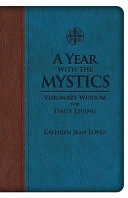
Ever since I first heard Karlo Brousard was writing a book on purgatory, I have looked forward to reading it.
“Purgatory Is for Real: Good News About the Afterlife for Those Who Aren’t Perfect Yet”
Certainly in the last four years, the idea of purgatory has become more than a doctrine for me, but a daily lived experience of praying for the souls of the dead. Not that I had not done this before, it just became more immediate for me.
I wanted to see what further insights I might glean from this book.
Not surprisingly for a book published by Catholic Answers it leans towards apologetics and answering Protestant objections. Of course, purgatory is a doctrine denied by the large majority of Protestants. Still, I found it to be a beneficial read since answering objections always clarifies what the Church teaches on purgatory.
Interestingly, the book starts with an examining the concept of postmortem final purification in other non-Christian religions. One of the thrusts of this book is to open up readers to the idea that this is not just a Catholic idiosyncratic theological view. While the fact that other religions had some aspect of this idea does not prove the doctrine, this and viewpoints by some Protestants, shows the reasonable grounds to consider the idea.
While Karlo does not take up this line of argumentation, it seems to me many non-Catholics have a view of a sort of quasi-purgatory. That many would agree with Revelation 21:27 that nothing unclean shall enter heaven and stipulate that if they were to die now that they would need God to clean them up. We can naturally grasp out sinfulness and the disparity in entering the beatific vision and the immediate knowledge of God.
He then lays the groundwork with several premises regarding the state of our soul upon death and what conclusions these lead to in regard to this doctrine.
The chapters ahead discuss the support of the concept of purgatory in the Old Testament, Jesus, and then Paul’s teachings. Addressing some common objections and then looking at what the Church Fathers and what other early ecclesiastical writers had to say. Capping this off with a deeper look into the theology. What the Church has infallibly defined about purgatory is actually rather limited in that it exists, that there are purifying punishments to remove the debt of remaining sins, and once purified the person will enter heaven. There is also some development of doctrine occurring in this area as recently as Pope Benedict XVI encylical Spe Salvi.
This book was as good as I expected it would be and it delivered more. I liked the appendix with a small sample of stories of the saints in regard to purgatory.
I found much to deepen my own knowledge and to reflect on. Another theme in this book regards joy and this doctrine. The pains of purgatory can be overemphasized with us not reflecting on how this is another aspect of God’s love for us.
I find much comfort in praying for the souls of my family and for others. That this is a spiritual act of mercy. That while it is certainly true that their prayers for us are beneficial for us, I just do not feel mercenary in asking their prayers since it is not my primary motive.
I also like that there is a sense where we are entering God’s “time” in that the prayers of the dead are never late. We have no idea if our loved ones are now in Heaven and can thus stop praying for them. Yet even if they are indeed in Heaven our prayers enter into God’s “time” and can be applied to them or for others as God sees fit. Sure I wish for a mechanistic way to know they are no longer in purgatory like a bell announcing and Angel getting its wings. Plus it is difficult to keep praying for my wife almost like it would be an insult to think she is still in purgatory. Yeah, that is stupid – but still.
I will stop here since this review is too long as it is. It is just I so enjoyed this book that I want to keep talking about it and what the Church teaches on it.
Purchase: